Why Movement Breaks Are Not a "Nice to Have" — They Are Essential in the Classroom
Short, intentional movement helps children regulate and engage more deeply in learning.
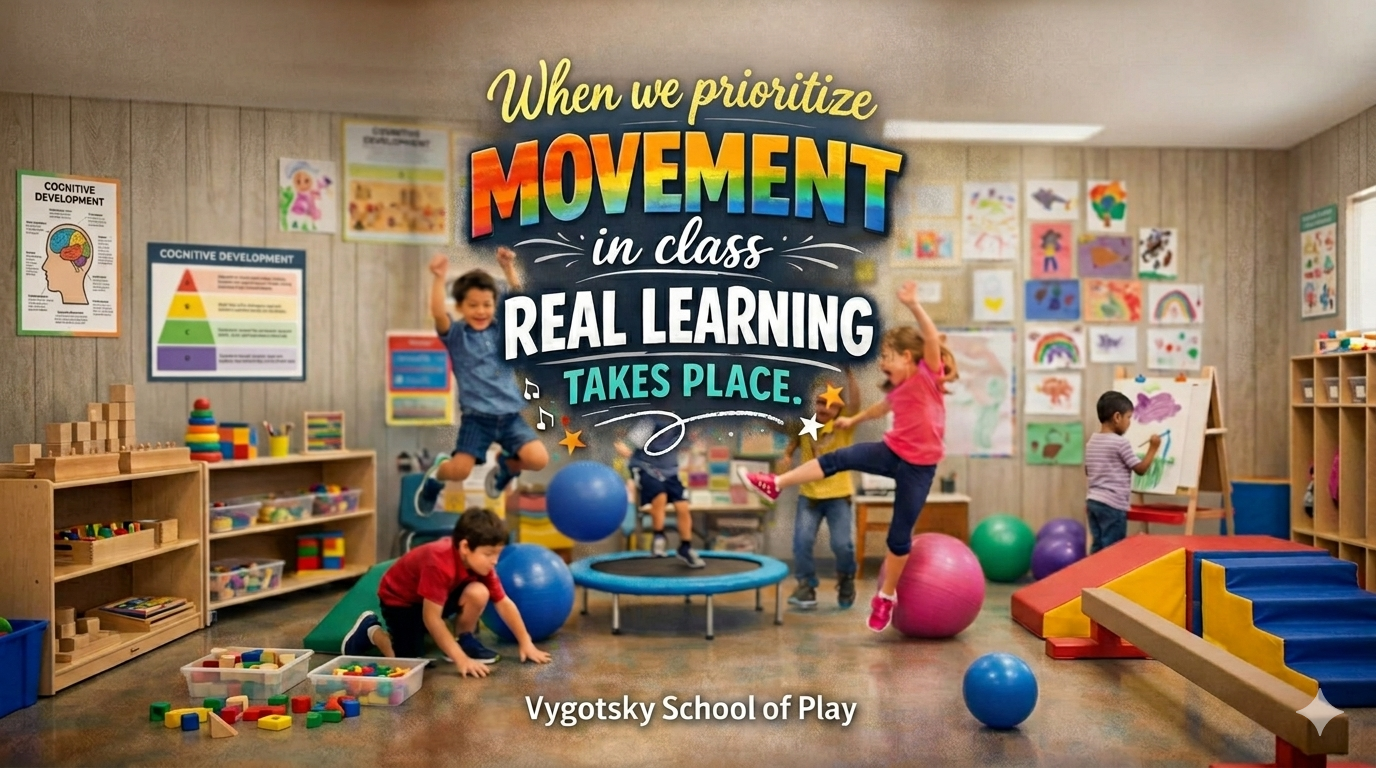
Children Are Not Meant to Sit Still
Young children are simply not wired to sit at a desk for long periods of time. Their bodies are constantly seeking movement, and when we ignore that need, we start to see it come out in other ways — fidgeting, poor concentration, emotional outbursts, and difficulty following instructions.
Movement is the body's way of regulating the brain.
What Movement Breaks Look Like in My Classroom
Movement breaks are not long, structured sessions. They are short, intentional, and woven into our day.
Sometimes it looks like a child doing a few jumps on the mini trampoline to settle themselves. Sometimes it is sitting and gently bouncing on a yoga ball during an activity, or standing on a balancing board while listening to a story. Other times it is a quick "jump and count" break between tasks.
These small moments make a big difference.
The Power of Regulation
When children move, they are not simply "burning off energy." They are developing their vestibular and proprioceptive systems — both of which are essential for self-regulation.
When a child is regulated, they can focus better, they are calmer, and they engage more meaningfully in activities. Learning becomes natural rather than forced.
I see this in my class every day. A child who battles to sit and listen can suddenly engage after just a minute of movement.
Movement Supports All Learners
Movement breaks are especially powerful for children with sensory needs, children who struggle with attention, and neurodiverse learners. But the truth is, every child benefits.
In my classroom, movement is not only for the child who is "busy." It is for everyone.
Shifting Our Mindset as Teachers
We need to move away from the idea that a "good class" is a quiet class where children sit still.
A good class is one where children are engaged, regulated, curious, and actively taking part. And sometimes, that includes bouncing, balancing, and jumping.
Final Thoughts
When we prioritise movement in the classroom, real learning takes place.
It is not about losing control of the class — it is about understanding what children need in order to learn.
And sometimes, what they need most… is to move.
About the Author

Nadine Nelson leads Vygotsky School of Play with a focus on play-based learning and developmentally appropriate practice. She advocates for classroom approaches that support the whole child — socially, emotionally, and physically.